
Avada Car Dealer News

Every group heading to American Family Field or Fiserv Forum eventually runs into the same question: who’s driving, where are we parking, and how do ten people end up in one place instead of scattered across three cars. Milwaukee hosts well over a hundred Brewers and Bucks home dates combined each year, and on most of them, the lots fill early, the exits back up, and rideshare pricing does whatever it wants right when everyone’s trying to leave at once.

This guide covers the specific logistics of getting a group in and out of Milwaukee’s two biggest venues on an actual game day — tailgates, overtime, rain delays, group sizes, cost-splitting, and the walk from wherever you end up parked. It’s written for people actually planning a trip to a game, not a general overview of “why limos are nice.”

Why Each Venue Creates a Different Headache

American Family Field: Plenty of Lots, One Bottleneck

The stadium sits inside a large surface parking complex off I-94, so space itself usually isn’t the problem — the exit is. A near-sellout crowd, especially for a weekend series or a fireworks night, turns the merge back onto I-94 and Stadium Freeway into a slow crawl that can eat 45 minutes or more after the final out. Anyone who’s sat in that line with a car full of tired kids or a group that just wants to get to the next bar downtown knows it’s rarely the game itself that ruins the night — it’s the twenty minutes spent stuck three rows back from the exit ramp.

A few things worth knowing before you plan around it:

  • Lot choice matters more than what time you arrive. The lots nearest the gates fill first and cost more; the cheaper outer lots mean a 10–15 minute walk each way, longer with tailgate gear in tow.
  • Larger passenger vehicles often get routed to specific lots built for buses and vans, which can mean a shorter walk than a car stuck in overflow parking further out.
  • Weekday afternoon games and weekend night games fill differently. A Tuesday 1:10 PM getaway game draws a lighter, more local crowd than a Friday or Saturday night game against a division rival, and the lots reflect that — arrive at the same relative time before first pitch and you’ll find very different traffic on each.
  • A rain delay changes everything about the walk back to your car, especially on a night that was already running late and everyone just wants to be inside somewhere dry.

Fiserv Forum: Less Space, More People on Foot

Downtown flips the problem around. Instead of spread-out lots, you’ve got a tight supply of parking structures wedged into the Deer District, surrounded by bars, restaurants, and foot traffic that slows every nearby street on a game night — sold out or not.

  • Structures near the arena sell out fast, pushing latecomers several blocks away regardless of what they paid to park.
  • The Deer District plaza itself draws a crowd independent of the game. On a big night, the outdoor plaza between Fiserv Forum and the surrounding bars fills with people who never bought a ticket, which adds foot traffic to every nearby street whether or not the arena is sold out.
  • Rideshare pricing spikes hardest in the 10–15 minutes after the final buzzer — the exact window most groups are trying to leave in, and the window drivers are least willing to sit in traffic for.
  • Street closures shift from game to game depending on what else is happening downtown that night, so a route that worked for the last game isn’t guaranteed to work for this one.
  • Winter game nights add a layer surface parking doesn’t have to deal with. Structured decks mean less snow removal hassle than a surface lot, but the sidewalks and crosswalks around the plaza still ice over, and a group walking several blocks in January dress shoes is a different experience than the same walk in September.

Side-by-Side Comparison

American Family FieldFiserv Forum
Parking typeSurface lots, spread outStructured parking, dense
Main bottleneckExit traffic onto I-94/Stadium FreewayDeer District foot traffic & closures
SeasonApril–SeptemberOctober–April (June in a playoff run)
Tailgate factorCommon, dedicated lotsNot typical
Walk from cheap parking10–15 minutes4–8 blocks
Worst traffic windowPost-game exit merge10–15 min after final buzzer

Two Sports, Two Traffic Calendars

Brewers season overlaps summer festival traffic, road construction season, and long daylight evenings, so a 7:10 PM first pitch in July lands right in the tail end of rush hour — two separate traffic problems compressed into the same 45-minute window. Bucks season shifts the same problem downtown into winter conditions. A 7:00 PM tip-off in January means icy sidewalks and dark streets on top of the usual Deer District crowd, and a slower, more cautious drive on top of the usual congestion.

Whichever calendar applies to your date changes how much buffer a driver builds into the schedule, and it’s part of why a chauffeur who works both venues year-round plans differently for an April Brewers night than a January Bucks night, even if the crowd size is similar.

Why Rideshare Specifically Struggles After a Game

It’s worth being specific about this, because it’s not simply “more people want a ride at once.” Three separate problems stack on top of each other:

  • Supply doesn’t scale with demand. The number of drivers actively working the area doesn’t multiply the way ticket sales do, so the ratio of riders to available cars gets worse exactly when a big crowd is trying to leave.
  • Every app pulls from the same driver pool. Whether your group is using one app or splitting across two to try to beat the surge, you’re all competing for the same shrinking number of nearby drivers.
  • Pickup logistics eat the time savings. Even when a car is matched, navigating it through exit traffic to your exact pickup point can take longer than the wait itself did.

A reservation made in advance sidesteps all three, because the vehicle and driver are already committed to your group rather than getting summoned out of a shared, demand-driven pool at the worst possible moment.
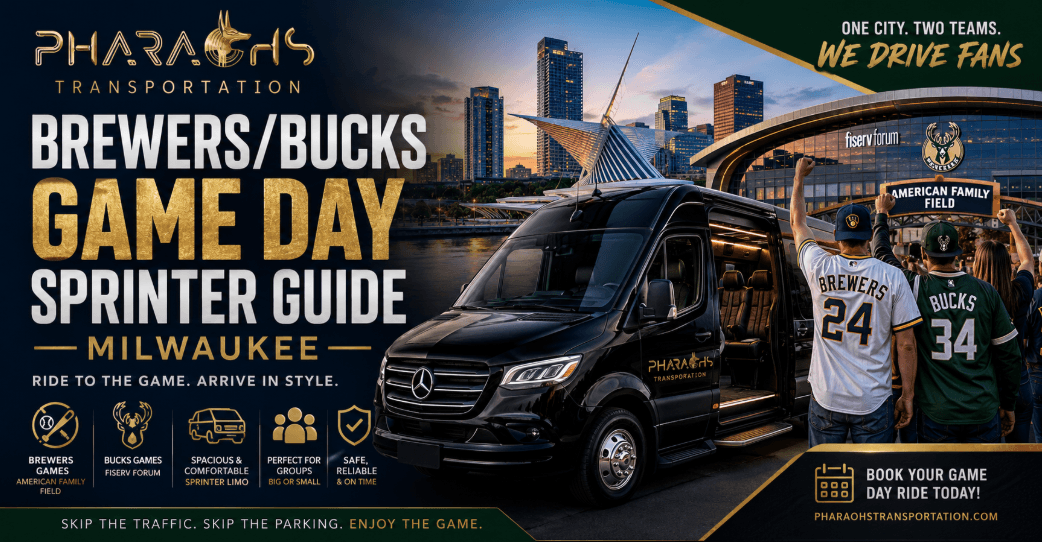
Game Day Sprinter Limo Milwaukee

How a Pre-Arranged Drop-off and Pickup Actually Works

At American Family Field, group vehicles typically use designated drop points near the main gates rather than the general lots, cutting out the walk from overflow parking entirely. At Fiserv Forum, drop-off happens along the streets bordering the Deer District — as close to the plaza entrances as that night’s closures allow, chosen ahead of time rather than figured out on the fly once you’re already downtown.

Pickup is where the time savings really show up, since it’s also when rideshare availability and pricing are both at their worst:

  1. A pickup window is set before the game, built around how the matchup is likely to run — a Brewers pitcher’s duel wraps differently than a five-run eighth inning, and Bucks overtime pushes the whole schedule back by 15–20 minutes minimum.
  2. The chauffeur tracks the game itself, not just a clock. A vehicle staged for a 9:45 PM finish based on typical game length is adjusted in real time if the game’s actually running long, rather than waiting for a text after the fact.
  3. A specific pickup point is agreed on before anyone walks in — a named corner, gate number, or landmark the whole group knows, not “somewhere near the stadium” figured out over text messages in a crowd.
  4. The group calls or texts on the way out, and the vehicle is already staged nearby rather than starting the approach from a distant lot or a downtown side street three blocks away.

The result is usually a pickup measured in minutes rather than the 30–45 minute wait that’s become normal for rideshare pickups after a sold-out game, when every app in the structure is trying to summon a car from the same shrinking pool at once.

The Parts of a Game You Can’t Schedule Around

  • Rain delays (on nights the retractable roof stays open, or during a full weather stoppage) can push a 7:10 PM first pitch past 9:00 PM before the game even starts. An hourly reservation adjusts the pickup window for that instead of charging a rebooking fee or leaving early because the clock ran out.
  • Extra innings or overtime can add anywhere from 20 minutes to well over an hour to an expected finish time. Because the vehicle is staged nearby rather than dispatched after a text, adjusting for a longer game doesn’t create the scramble it would with a same-day rideshare request.
  • Early exits happen too — a blowout, a getaway-day flight, or a group that just wants to beat the traffic out. A pre-arranged pickup window with some built-in flexibility handles a group leaving in the seventh inning just as easily as one staying for the final out.
  • Playoff and marquee-game unpredictability. A tied postseason game or a nationally televised rivalry matchup can run well past its normal window between commercial breaks, replay reviews, and a tighter, slower crowd exit — worth flagging to dispatch in advance so the pickup window has extra room built in.

Communicating the Plan Before Anyone Leaves Home

The single biggest factor in a smooth pickup isn’t the vehicle, it’s whether everyone in the group actually knows the plan before they’re standing outside a crowded gate trying to figure out where to go. A short pre-game text to the group — pickup corner, driver’s name, rough time — removes the “wait, where are we meeting?” conversation that otherwise plays out in the parking lot chaos after the last out or final buzzer.

Planning Around the Tailgate, Not Just the Game

Brewers games in particular come with a tailgate culture most transportation options simply aren’t built for. A group often isn’t going straight from home to the gate — they’re stopping at a tailgate lot first, spending two or three hours grilling and hanging out, and only heading in once the parking lot has thinned out toward first pitch.

A tailgate-inclusive booking usually looks different from a straight drop-off:

  • Early arrival for setup time, if the group is bringing a grill, coolers, or folding chairs and wants time to actually set up before the lot fills in around them.
  • A dedicated tailgate-lot drop-off, which is a different access point than the gate drop-off used by groups heading straight to their seats.
  • Room for the gear. A 15-passenger Executive Sprinter Limo has meaningfully more cargo space than a standard rideshare vehicle — worth a look at the Sprinter’s full layout and interior to see what that actually looks like with coolers and folding tables loaded in.
  • A second short transfer from the tailgate lot to the gate once the group is ready — rarely a fixed time, usually dictated by how the tailgate’s going and whether anyone’s mid-conversation with the group in the next spot over.

Because an hourly charter keeps the vehicle and chauffeur on call rather than booking a single point-to-point trip, a full game-day itinerary can realistically include a morning pickup, a stop for last-minute supplies, the tailgate-lot drop, the transfer to the gate, a post-game pickup, and a final stop for dinner or drinks — the kind of multi-stop day that’s genuinely hard to coordinate across several individual cars, and harder still once the group is trying to agree on who’s staying sober enough to drive everyone home.

Removing the Designated-Driver Trade-off

The classic tailgate problem is that someone has to stay sober enough to drive the group home, which usually means one person’s day looks different from everyone else’s. Booking transportation for the full tailgate-to-game-to-home stretch removes that trade-off — everyone gets to tailgate the same way, and the day isn’t built around who’s driving.

Weekday vs. Weekend Tailgate Windows

Weekend day games tend to have the longest tailgate windows — sometimes three or four hours before a 1:10 PM first pitch — while weeknight games compress the tailgate into a shorter window after work, usually meaning a tighter pickup-to-drop-off turnaround since there’s less flexibility before first pitch. Weekend groups tend to have more room to adjust the schedule on the fly if the tailgate’s going long and nobody’s in a hurry to head in.

Postseason and Marquee Game Tailgates

When the Brewers are in playoff contention or hosting a marquee interleague series, tailgate lots fill earlier and the surrounding traffic gets heavier well before the first tailgate-goer even sets up a grill. Groups planning around a high-profile game should expect earlier lot access times and should flag that with dispatch, since the drop-off window for a big game can shift an hour or more earlier than a routine weeknight game against a non-rival opponent.

Group Size, Vehicle Fit, and What Actually Comfortably Seats a Crowd

Not every group is the same size, and the right vehicle for six friends splitting a suite is different from the right vehicle for a 14-person birthday party. A rough guide:

  • 4–6 people: an Executive SUV or black car usually covers it comfortably, especially for a straightforward gate drop-off and pickup without a tailgate stop attached.
  • 7–10 people: this is the range where a Sprinter starts to make more sense than splitting across two SUVs, mostly because it keeps the group together for the whole day rather than coordinating two separate pickups.
  • 11–15 people: the Executive Sprinter Limo is built for exactly this range, with lounge-style, face-to-face seating rather than rows facing forward — which matters for a group that wants to actually talk to each other on the ride instead of shouting over three rows of seats.
  • Larger corporate or suite groups: worth a call to dispatch directly, since larger parties sometimes split cleanly across a Sprinter for the main group and a black car or SUV for a smaller VIP subset arriving separately.

Checking the full fleet page before booking is worth it if you’re not sure which vehicle actually fits your group size and gear — the difference between “technically fits” and “comfortably fits with coolers and jackets” is usually one seating tier.

Splitting the Cost Across a Group

For eight or more riders, a flat-rate reservation is typically split by dividing the total by the number of people — one number, agreed on before the game, rather than reconciling separate rideshare receipts afterward or figuring out who owes what for gas and parking.

Compare that to the alternative most groups default to without thinking about it:

  • Parking fees are charged per vehicle, not per person, so three separate cars means paying for parking three separate times.
  • Rideshare pricing after the game is unpredictable, and surge pricing on the way out often runs well above the normal daytime rate — meaning the group doesn’t actually know its total transportation cost until everyone’s already trying to leave.
  • Splitting into multiple vehicles means splitting the group, which for a lot of game-day outings defeats part of the point of going together in the first place.

A Simple Framework Groups Actually Use

  • Even split among all riders — the most common approach. Take the total flat rate, divide by the number of people, and everyone pays the same share regardless of pickup or drop-off point along the route.
  • One person books, everyone reimburses — whoever organizes the outing books directly and collects each person’s share afterward, which keeps the booking process simple since dispatch only coordinates with one point of contact.
  • Split by department or budget line for larger corporate groups, especially when a reservation covers a suite party along with additional staff attending the same event.

Corporate Suite Holders and Client Entertainment

For corporate ticket holders — a suite reservation, a client entertainment package, or a company outing — group transportation solves a slightly different problem than it does for a group of friends: professional, on-time arrival for a group where a few people showing up late or scrambling for parking reflects on the whole event, not just the individuals involved. Booking one vehicle for the group also simplifies expense reporting into a single line item rather than a stack of individual reimbursements, which matters more than it sounds like it should when someone’s filling out an expense report the following week.

A Sprinter reservation timed around a suite group’s schedule means clients or guests aren’t individually navigating stadium parking on top of everything else the day already involves — and it keeps the group together for the ride home, when the conversation from the game (and whatever business was actually discussed in the suite) is often still going.

Choosing the Right Vehicle

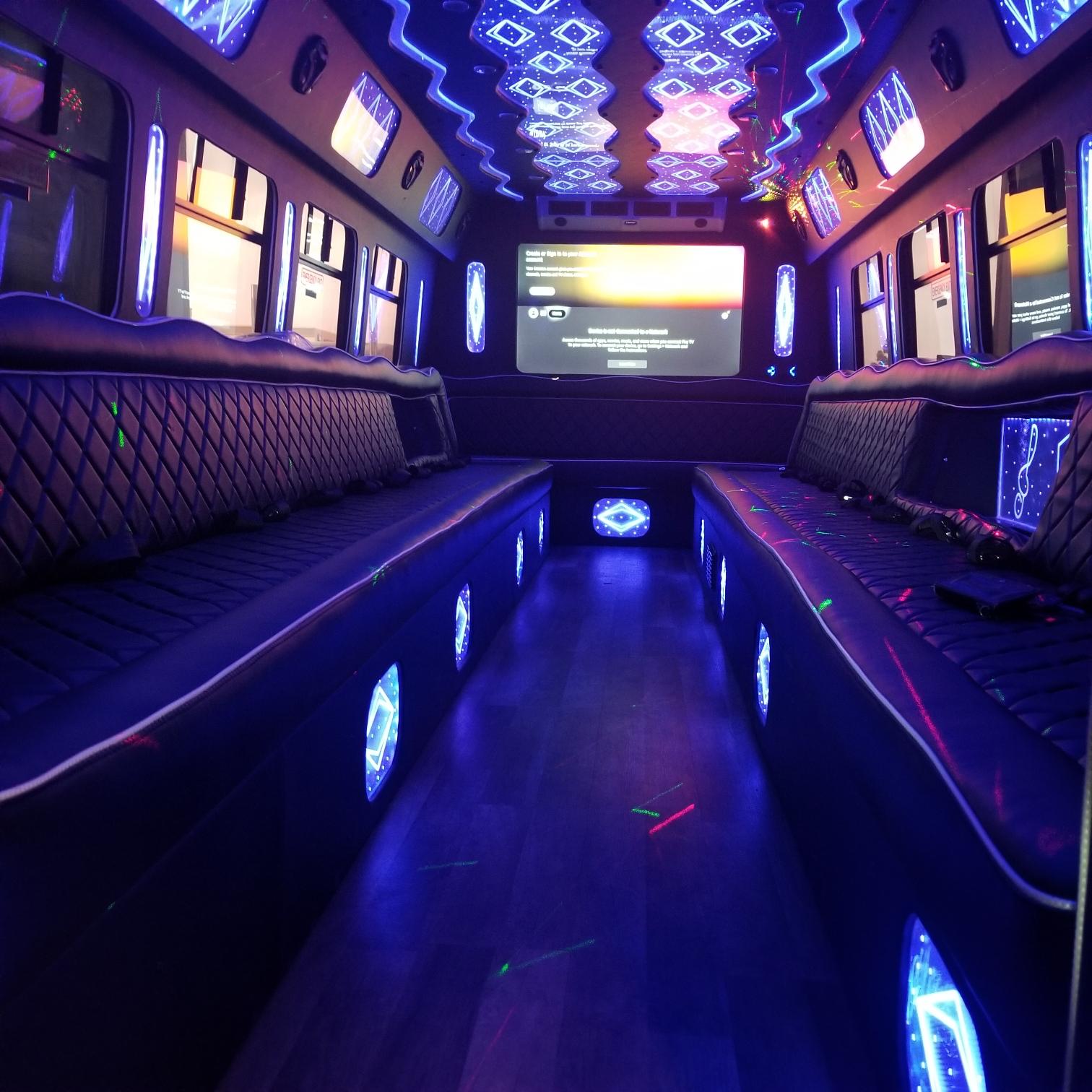
The Executive Sprinter Limo seats up to 15 in a lounge-style, face-to-face layout — bigger than a standard black car or SUV, but still one vehicle that keeps the whole group together instead of splitting across multiple cars. Smaller groups are often better matched to an Executive SUV, while a bachelor or bachelorette send-off, a milestone birthday, or a group turning the game into a full night out downtown tends to prefer the Sprinter’s LED lounge interior — worth a look at the full vehicle gallery, or the larger jet-lounge Sprinter if the group is closer to 14–15 people with gear.

For groups combining a game day with other events on the same trip — a wedding weekend that happens to land on a Brewers homestand, a client visit that ends with courtside tickets, a birthday that starts with dinner and ends at Fiserv Forum — Pharaoh’s event transportation, birthday limo service, and point-to-point service cover those adjacent pieces of the day without needing a separate provider for each leg.
Before and After the Game: Making the Whole Day Work

A game is rarely the entire plan for the day, and a transportation reservation built only around first pitch or tip-off misses most of what actually happens around it.

Before the game: groups flying in for a weekend series often want an airport pickup that flows directly into the game-day plan rather than a separate transfer booked through a different service — landing at MKE, checking into a downtown hotel, then heading straight to Fiserv Forum or American Family Field without switching vehicles or providers partway through the day.

After the game: a late dinner downtown, a stop at a bar in the Deer District or the Historic Third Ward, or a straight ride back to a hotel — all of it fits inside the same hourly reservation rather than requiring a second booking once the game itself wraps up. For groups catching an early flight the next morning, having the same driver who handled the game-day pickup also confirmed for an early airport run removes one more thing to coordinate separately.

Why Game Day Groups Choose a Pre-Arranged Vehicle Over Driving Themselves

At the end of the day, the appeal comes down to removing the parts of game day that have nothing to do with the game itself. Nobody plans a group outing around wanting to circle a parking structure looking for a spot, or wanting to stand in a crowd of a thousand people all refreshing the same rideshare app at once.

A pre-arranged vehicle turns those unpredictable, stressful parts of the day into the one piece of the plan that’s actually settled before anyone leaves the house — which lets the group’s attention stay where it should be: on the game, the tailgate, and the people they came with.

Booking Ahead of Game Day

Brewers and Bucks schedules are published well in advance, which means game-day transportation is one of the easier things to plan ahead of time rather than scrambling the morning of:

  1. Call or text dispatch at (414) 322-3751 with your date, venue, and group size.
  2. Confirm the itinerary — a straight drop-off and pickup, or a full tailgate-to-game-to-home plan with multiple stops.
  3. Set the pickup point in advance — a specific gate at American Family Field, or a corner near the Fiserv Forum plaza.
  4. Lock in a flat rate, which covers the group regardless of how the per-person split gets worked out afterward.
  5. Get a driver check-in ahead of game day confirming pickup timing, especially for weekend or marquee matchups where lot access shifts earlier than usual.

Weekend games and rivalry matchups book out first, so reserving as soon as tickets are confirmed keeps the most flexibility on timing and vehicle availability, especially heading into a playoff push when demand for game-day vehicles climbs fast.

Frequently Asked Questions

Does a Sprinter drop off closer to the stadium than a regular parking lot?

Yes — group vehicles typically use dedicated drop zones near the main gates at American Family Field, and along the streets closest to the Deer District plaza at Fiserv Forum, both closer than the walk from a standard overflow lot.

Can the driver wait through the whole game instead of a one-way drop-off?

Yes — through an hourly reservation the vehicle and chauffeur stay on call for the full game, including tailgate stops before and after, rather than being booked as a single point-to-point trip.

What happens if the game goes into overtime or extra innings?

The chauffeur tracks the game itself, not just a clock, and adjusts pickup timing accordingly. The pre-agreed pickup point means the group doesn’t need to guess where to meet even if the finish runs later than expected.

Is this cost-effective compared to individual rideshare rides?

For groups of roughly eight or more, splitting one flat rate is typically more predictable — and often cheaper per person — than several rideshare trips, especially once post-game surge pricing kicks in.

Can it handle tailgate gear like coolers and folding chairs?

Yes — the Sprinter’s cargo space handles tailgate equipment more comfortably than a standard rideshare car, which matters for a group tailgating before an American Family Field game.

Do you cover both Brewers and Bucks games, or just one?

Both — the same Sprinter service covers American Family Field in spring and summer and Fiserv Forum in fall and winter, adjusted for each venue’s drop-off and traffic pattern. For a concert or a night out at either venue instead of a game, see event and game-day transportation.

What if our tickets are for a suite instead of general seating?

Suite groups typically coordinate one arrival and departure time for the whole party, built around that group’s schedule rather than individual pickup times — see corporate transportation for how that’s usually set up.

How far in advance should we book for a weekend game?

As soon as tickets are confirmed. Weekend games and rivalry matchups are the first reservations to fill on a given homestand, and that’s before accounting for how much earlier demand climbs during a playoff push.

Can the reservation include an airport pickup or drop-off around the same trip?

Yes — for out-of-town groups, airport transportation can be built into the same reservation as the game-day plan, so the trip from MKE to the hotel to the stadium and back doesn’t require switching providers partway through.

Call or text (414) 322-3751 to book Brewers or Bucks game-day transportation

— flat rates, 24/7 dispatch, and a chauffeur who already knows where to be when the final out or final buzzer comes. Reserve online or browse the full fleet.


Related Milwaukee Transportation Services

Avada Car Dealer News

Every group heading to American Family Field or Fiserv Forum eventually runs into the same question: who’s driving, where are we parking, and how do ten people end up in one place instead of scattered across three cars. Milwaukee hosts well over a hundred Brewers and Bucks home dates combined each year, and on most of them, the lots fill early, the exits back up, and rideshare pricing does whatever it wants right when everyone’s trying to leave at once.

This guide covers the specific logistics of getting a group in and out of Milwaukee’s two biggest venues on an actual game day — tailgates, overtime, rain delays, group sizes, cost-splitting, and the walk from wherever you end up parked. It’s written for people actually planning a trip to a game, not a general overview of “why limos are nice.”

Why Each Venue Creates a Different Headache

American Family Field: Plenty of Lots, One Bottleneck

The stadium sits inside a large surface parking complex off I-94, so space itself usually isn’t the problem — the exit is. A near-sellout crowd, especially for a weekend series or a fireworks night, turns the merge back onto I-94 and Stadium Freeway into a slow crawl that can eat 45 minutes or more after the final out. Anyone who’s sat in that line with a car full of tired kids or a group that just wants to get to the next bar downtown knows it’s rarely the game itself that ruins the night — it’s the twenty minutes spent stuck three rows back from the exit ramp.

A few things worth knowing before you plan around it:

  • Lot choice matters more than what time you arrive. The lots nearest the gates fill first and cost more; the cheaper outer lots mean a 10–15 minute walk each way, longer with tailgate gear in tow.
  • Larger passenger vehicles often get routed to specific lots built for buses and vans, which can mean a shorter walk than a car stuck in overflow parking further out.
  • Weekday afternoon games and weekend night games fill differently. A Tuesday 1:10 PM getaway game draws a lighter, more local crowd than a Friday or Saturday night game against a division rival, and the lots reflect that — arrive at the same relative time before first pitch and you’ll find very different traffic on each.
  • A rain delay changes everything about the walk back to your car, especially on a night that was already running late and everyone just wants to be inside somewhere dry.

Fiserv Forum: Less Space, More People on Foot

Downtown flips the problem around. Instead of spread-out lots, you’ve got a tight supply of parking structures wedged into the Deer District, surrounded by bars, restaurants, and foot traffic that slows every nearby street on a game night — sold out or not.

  • Structures near the arena sell out fast, pushing latecomers several blocks away regardless of what they paid to park.
  • The Deer District plaza itself draws a crowd independent of the game. On a big night, the outdoor plaza between Fiserv Forum and the surrounding bars fills with people who never bought a ticket, which adds foot traffic to every nearby street whether or not the arena is sold out.
  • Rideshare pricing spikes hardest in the 10–15 minutes after the final buzzer — the exact window most groups are trying to leave in, and the window drivers are least willing to sit in traffic for.
  • Street closures shift from game to game depending on what else is happening downtown that night, so a route that worked for the last game isn’t guaranteed to work for this one.
  • Winter game nights add a layer surface parking doesn’t have to deal with. Structured decks mean less snow removal hassle than a surface lot, but the sidewalks and crosswalks around the plaza still ice over, and a group walking several blocks in January dress shoes is a different experience than the same walk in September.

Side-by-Side Comparison

American Family FieldFiserv Forum
Parking typeSurface lots, spread outStructured parking, dense
Main bottleneckExit traffic onto I-94/Stadium FreewayDeer District foot traffic & closures
SeasonApril–SeptemberOctober–April (June in a playoff run)
Tailgate factorCommon, dedicated lotsNot typical
Walk from cheap parking10–15 minutes4–8 blocks
Worst traffic windowPost-game exit merge10–15 min after final buzzer

Two Sports, Two Traffic Calendars

Brewers season overlaps summer festival traffic, road construction season, and long daylight evenings, so a 7:10 PM first pitch in July lands right in the tail end of rush hour — two separate traffic problems compressed into the same 45-minute window. Bucks season shifts the same problem downtown into winter conditions. A 7:00 PM tip-off in January means icy sidewalks and dark streets on top of the usual Deer District crowd, and a slower, more cautious drive on top of the usual congestion.

Whichever calendar applies to your date changes how much buffer a driver builds into the schedule, and it’s part of why a chauffeur who works both venues year-round plans differently for an April Brewers night than a January Bucks night, even if the crowd size is similar.

Why Rideshare Specifically Struggles After a Game

It’s worth being specific about this, because it’s not simply “more people want a ride at once.” Three separate problems stack on top of each other:

  • Supply doesn’t scale with demand. The number of drivers actively working the area doesn’t multiply the way ticket sales do, so the ratio of riders to available cars gets worse exactly when a big crowd is trying to leave.
  • Every app pulls from the same driver pool. Whether your group is using one app or splitting across two to try to beat the surge, you’re all competing for the same shrinking number of nearby drivers.
  • Pickup logistics eat the time savings. Even when a car is matched, navigating it through exit traffic to your exact pickup point can take longer than the wait itself did.

A reservation made in advance sidesteps all three, because the vehicle and driver are already committed to your group rather than getting summoned out of a shared, demand-driven pool at the worst possible moment.

Game Day Sprinter Limo Milwaukee

How a Pre-Arranged Drop-off and Pickup Actually Works

At American Family Field, group vehicles typically use designated drop points near the main gates rather than the general lots, cutting out the walk from overflow parking entirely. At Fiserv Forum, drop-off happens along the streets bordering the Deer District — as close to the plaza entrances as that night’s closures allow, chosen ahead of time rather than figured out on the fly once you’re already downtown.

Pickup is where the time savings really show up, since it’s also when rideshare availability and pricing are both at their worst:

  1. A pickup window is set before the game, built around how the matchup is likely to run — a Brewers pitcher’s duel wraps differently than a five-run eighth inning, and Bucks overtime pushes the whole schedule back by 15–20 minutes minimum.
  2. The chauffeur tracks the game itself, not just a clock. A vehicle staged for a 9:45 PM finish based on typical game length is adjusted in real time if the game’s actually running long, rather than waiting for a text after the fact.
  3. A specific pickup point is agreed on before anyone walks in — a named corner, gate number, or landmark the whole group knows, not “somewhere near the stadium” figured out over text messages in a crowd.
  4. The group calls or texts on the way out, and the vehicle is already staged nearby rather than starting the approach from a distant lot or a downtown side street three blocks away.

The result is usually a pickup measured in minutes rather than the 30–45 minute wait that’s become normal for rideshare pickups after a sold-out game, when every app in the structure is trying to summon a car from the same shrinking pool at once.

The Parts of a Game You Can’t Schedule Around

  • Rain delays (on nights the retractable roof stays open, or during a full weather stoppage) can push a 7:10 PM first pitch past 9:00 PM before the game even starts. An hourly reservation adjusts the pickup window for that instead of charging a rebooking fee or leaving early because the clock ran out.
  • Extra innings or overtime can add anywhere from 20 minutes to well over an hour to an expected finish time. Because the vehicle is staged nearby rather than dispatched after a text, adjusting for a longer game doesn’t create the scramble it would with a same-day rideshare request.
  • Early exits happen too — a blowout, a getaway-day flight, or a group that just wants to beat the traffic out. A pre-arranged pickup window with some built-in flexibility handles a group leaving in the seventh inning just as easily as one staying for the final out.
  • Playoff and marquee-game unpredictability. A tied postseason game or a nationally televised rivalry matchup can run well past its normal window between commercial breaks, replay reviews, and a tighter, slower crowd exit — worth flagging to dispatch in advance so the pickup window has extra room built in.

Communicating the Plan Before Anyone Leaves Home

The single biggest factor in a smooth pickup isn’t the vehicle, it’s whether everyone in the group actually knows the plan before they’re standing outside a crowded gate trying to figure out where to go. A short pre-game text to the group — pickup corner, driver’s name, rough time — removes the “wait, where are we meeting?” conversation that otherwise plays out in the parking lot chaos after the last out or final buzzer.

Planning Around the Tailgate, Not Just the Game

Brewers games in particular come with a tailgate culture most transportation options simply aren’t built for. A group often isn’t going straight from home to the gate — they’re stopping at a tailgate lot first, spending two or three hours grilling and hanging out, and only heading in once the parking lot has thinned out toward first pitch.

A tailgate-inclusive booking usually looks different from a straight drop-off:

  • Early arrival for setup time, if the group is bringing a grill, coolers, or folding chairs and wants time to actually set up before the lot fills in around them.
  • A dedicated tailgate-lot drop-off, which is a different access point than the gate drop-off used by groups heading straight to their seats.
  • Room for the gear. A 15-passenger Executive Sprinter Limo has meaningfully more cargo space than a standard rideshare vehicle — worth a look at the Sprinter’s full layout and interior to see what that actually looks like with coolers and folding tables loaded in.
  • A second short transfer from the tailgate lot to the gate once the group is ready — rarely a fixed time, usually dictated by how the tailgate’s going and whether anyone’s mid-conversation with the group in the next spot over.

Because an hourly charter keeps the vehicle and chauffeur on call rather than booking a single point-to-point trip, a full game-day itinerary can realistically include a morning pickup, a stop for last-minute supplies, the tailgate-lot drop, the transfer to the gate, a post-game pickup, and a final stop for dinner or drinks — the kind of multi-stop day that’s genuinely hard to coordinate across several individual cars, and harder still once the group is trying to agree on who’s staying sober enough to drive everyone home.

Removing the Designated-Driver Trade-off

The classic tailgate problem is that someone has to stay sober enough to drive the group home, which usually means one person’s day looks different from everyone else’s. Booking transportation for the full tailgate-to-game-to-home stretch removes that trade-off — everyone gets to tailgate the same way, and the day isn’t built around who’s driving.

Weekday vs. Weekend Tailgate Windows

Weekend day games tend to have the longest tailgate windows — sometimes three or four hours before a 1:10 PM first pitch — while weeknight games compress the tailgate into a shorter window after work, usually meaning a tighter pickup-to-drop-off turnaround since there’s less flexibility before first pitch. Weekend groups tend to have more room to adjust the schedule on the fly if the tailgate’s going long and nobody’s in a hurry to head in.

Postseason and Marquee Game Tailgates

When the Brewers are in playoff contention or hosting a marquee interleague series, tailgate lots fill earlier and the surrounding traffic gets heavier well before the first tailgate-goer even sets up a grill. Groups planning around a high-profile game should expect earlier lot access times and should flag that with dispatch, since the drop-off window for a big game can shift an hour or more earlier than a routine weeknight game against a non-rival opponent.

Group Size, Vehicle Fit, and What Actually Comfortably Seats a Crowd

Not every group is the same size, and the right vehicle for six friends splitting a suite is different from the right vehicle for a 14-person birthday party. A rough guide:

  • 4–6 people: an Executive SUV or black car usually covers it comfortably, especially for a straightforward gate drop-off and pickup without a tailgate stop attached.
  • 7–10 people: this is the range where a Sprinter starts to make more sense than splitting across two SUVs, mostly because it keeps the group together for the whole day rather than coordinating two separate pickups.
  • 11–15 people: the Executive Sprinter Limo is built for exactly this range, with lounge-style, face-to-face seating rather than rows facing forward — which matters for a group that wants to actually talk to each other on the ride instead of shouting over three rows of seats.
  • Larger corporate or suite groups: worth a call to dispatch directly, since larger parties sometimes split cleanly across a Sprinter for the main group and a black car or SUV for a smaller VIP subset arriving separately.

Checking the full fleet page before booking is worth it if you’re not sure which vehicle actually fits your group size and gear — the difference between “technically fits” and “comfortably fits with coolers and jackets” is usually one seating tier.

Splitting the Cost Across a Group

For eight or more riders, a flat-rate reservation is typically split by dividing the total by the number of people — one number, agreed on before the game, rather than reconciling separate rideshare receipts afterward or figuring out who owes what for gas and parking.

Compare that to the alternative most groups default to without thinking about it:

  • Parking fees are charged per vehicle, not per person, so three separate cars means paying for parking three separate times.
  • Rideshare pricing after the game is unpredictable, and surge pricing on the way out often runs well above the normal daytime rate — meaning the group doesn’t actually know its total transportation cost until everyone’s already trying to leave.
  • Splitting into multiple vehicles means splitting the group, which for a lot of game-day outings defeats part of the point of going together in the first place.

A Simple Framework Groups Actually Use

  • Even split among all riders — the most common approach. Take the total flat rate, divide by the number of people, and everyone pays the same share regardless of pickup or drop-off point along the route.
  • One person books, everyone reimburses — whoever organizes the outing books directly and collects each person’s share afterward, which keeps the booking process simple since dispatch only coordinates with one point of contact.
  • Split by department or budget line for larger corporate groups, especially when a reservation covers a suite party along with additional staff attending the same event.

Corporate Suite Holders and Client Entertainment

For corporate ticket holders — a suite reservation, a client entertainment package, or a company outing — group transportation solves a slightly different problem than it does for a group of friends: professional, on-time arrival for a group where a few people showing up late or scrambling for parking reflects on the whole event, not just the individuals involved. Booking one vehicle for the group also simplifies expense reporting into a single line item rather than a stack of individual reimbursements, which matters more than it sounds like it should when someone’s filling out an expense report the following week.

A Sprinter reservation timed around a suite group’s schedule means clients or guests aren’t individually navigating stadium parking on top of everything else the day already involves — and it keeps the group together for the ride home, when the conversation from the game (and whatever business was actually discussed in the suite) is often still going.

Choosing the Right Vehicle

The Executive Sprinter Limo seats up to 15 in a lounge-style, face-to-face layout — bigger than a standard black car or SUV, but still one vehicle that keeps the whole group together instead of splitting across multiple cars. Smaller groups are often better matched to an Executive SUV, while a bachelor or bachelorette send-off, a milestone birthday, or a group turning the game into a full night out downtown tends to prefer the Sprinter’s LED lounge interior — worth a look at the full vehicle gallery, or the larger jet-lounge Sprinter if the group is closer to 14–15 people with gear.

For groups combining a game day with other events on the same trip — a wedding weekend that happens to land on a Brewers homestand, a client visit that ends with courtside tickets, a birthday that starts with dinner and ends at Fiserv Forum — Pharaoh’s event transportation, birthday limo service, and point-to-point service cover those adjacent pieces of the day without needing a separate provider for each leg.

Before and After the Game: Making the Whole Day Work

A game is rarely the entire plan for the day, and a transportation reservation built only around first pitch or tip-off misses most of what actually happens around it.

Before the game: groups flying in for a weekend series often want an airport pickup that flows directly into the game-day plan rather than a separate transfer booked through a different service — landing at MKE, checking into a downtown hotel, then heading straight to Fiserv Forum or American Family Field without switching vehicles or providers partway through the day.

After the game: a late dinner downtown, a stop at a bar in the Deer District or the Historic Third Ward, or a straight ride back to a hotel — all of it fits inside the same hourly reservation rather than requiring a second booking once the game itself wraps up. For groups catching an early flight the next morning, having the same driver who handled the game-day pickup also confirmed for an early airport run removes one more thing to coordinate separately.

Why Game Day Groups Choose a Pre-Arranged Vehicle Over Driving Themselves

At the end of the day, the appeal comes down to removing the parts of game day that have nothing to do with the game itself. Nobody plans a group outing around wanting to circle a parking structure looking for a spot, or wanting to stand in a crowd of a thousand people all refreshing the same rideshare app at once.

A pre-arranged vehicle turns those unpredictable, stressful parts of the day into the one piece of the plan that’s actually settled before anyone leaves the house — which lets the group’s attention stay where it should be: on the game, the tailgate, and the people they came with.

Booking Ahead of Game Day

Brewers and Bucks schedules are published well in advance, which means game-day transportation is one of the easier things to plan ahead of time rather than scrambling the morning of:

  1. Call or text dispatch at (414) 322-3751 with your date, venue, and group size.
  2. Confirm the itinerary — a straight drop-off and pickup, or a full tailgate-to-game-to-home plan with multiple stops.
  3. Set the pickup point in advance — a specific gate at American Family Field, or a corner near the Fiserv Forum plaza.
  4. Lock in a flat rate, which covers the group regardless of how the per-person split gets worked out afterward.
  5. Get a driver check-in ahead of game day confirming pickup timing, especially for weekend or marquee matchups where lot access shifts earlier than usual.

Weekend games and rivalry matchups book out first, so reserving as soon as tickets are confirmed keeps the most flexibility on timing and vehicle availability, especially heading into a playoff push when demand for game-day vehicles climbs fast.

Frequently Asked Questions

Does a Sprinter drop off closer to the stadium than a regular parking lot?

Yes — group vehicles typically use dedicated drop zones near the main gates at American Family Field, and along the streets closest to the Deer District plaza at Fiserv Forum, both closer than the walk from a standard overflow lot.

Can the driver wait through the whole game instead of a one-way drop-off?

Yes — through an hourly reservation the vehicle and chauffeur stay on call for the full game, including tailgate stops before and after, rather than being booked as a single point-to-point trip.

What happens if the game goes into overtime or extra innings?

The chauffeur tracks the game itself, not just a clock, and adjusts pickup timing accordingly. The pre-agreed pickup point means the group doesn’t need to guess where to meet even if the finish runs later than expected.

Is this cost-effective compared to individual rideshare rides?

For groups of roughly eight or more, splitting one flat rate is typically more predictable — and often cheaper per person — than several rideshare trips, especially once post-game surge pricing kicks in.

Can it handle tailgate gear like coolers and folding chairs?

Yes — the Sprinter’s cargo space handles tailgate equipment more comfortably than a standard rideshare car, which matters for a group tailgating before an American Family Field game.

Do you cover both Brewers and Bucks games, or just one?

Both — the same Sprinter service covers American Family Field in spring and summer and Fiserv Forum in fall and winter, adjusted for each venue’s drop-off and traffic pattern. For a concert or a night out at either venue instead of a game, see event and game-day transportation.

What if our tickets are for a suite instead of general seating?

Suite groups typically coordinate one arrival and departure time for the whole party, built around that group’s schedule rather than individual pickup times — see corporate transportation for how that’s usually set up.

How far in advance should we book for a weekend game?

As soon as tickets are confirmed. Weekend games and rivalry matchups are the first reservations to fill on a given homestand, and that’s before accounting for how much earlier demand climbs during a playoff push.

Can the reservation include an airport pickup or drop-off around the same trip?

Yes — for out-of-town groups, airport transportation can be built into the same reservation as the game-day plan, so the trip from MKE to the hotel to the stadium and back doesn’t require switching providers partway through.

Call or text (414) 322-3751 to book Brewers or Bucks game-day transportation

— flat rates, 24/7 dispatch, and a chauffeur who already knows where to be when the final out or final buzzer comes. Reserve online or browse the full fleet.

Related Milwaukee Transportation Services